Unit 3 Test Part 2 Lesson 2428 Language Art
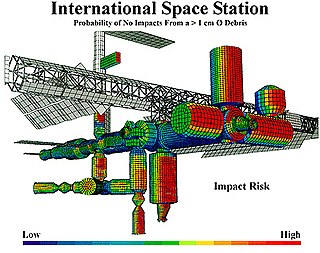
Risk direction is the identification, evaluation, and prioritization of risks (defined in ISO 31000 as the effect of uncertainty on objectives) followed by coordinated and economical application of resources to minimize, monitor, and control the probability or impact of unfortunate events[1] or to maximize the realization of opportunities.
Risks can come from various sources including incertitude in international markets, threats from project failures (at any phase in design, development, production, or sustaining of life-cycles), legal liabilities, credit take a chance, accidents, natural causes and disasters, deliberate assault from an adversary, or events of uncertain or unpredictable root-cause.
There are two types of events i.e. negative events can be classified as risks while positive events are classified as opportunities. Risk management standards accept been developed by various institutions, including the Project Management Plant, the National Institute of Standards and Technology, actuarial societies, and ISO standards.[2] [3] [4] Methods, definitions and goals vary widely according to whether the risk management method is in the context of project management, security, engineering, industrial processes, fiscal portfolios, actuarial assessments, or public health and prophylactic. Certain risk direction standards have been criticized for having no measurable improvement on chance, whereas the confidence in estimates and decisions seems to increase.[1]
Strategies to manage threats (uncertainties with negative consequences) typically include fugitive the threat, reducing the negative issue or probability of the threat, transferring all or part of the threat to another party, and even retaining some or all of the potential or actual consequences of a particular threat. The opposite of these strategies can be used to respond to opportunities (uncertain future states with benefits).
As a professional role, a Risk Manager [5] will "oversee the organization'due south comprehensive insurance and risk management plan, assessing and identifying risks that could impede the reputation, safety, security, or financial success of the system", and and so develop plans to minimize and / or mitigate any negative fiscal outcomes. Risk Analysts [6] back up the technical side of the organization's adventure management approach: once risk data has been compiled and evaluated, analysts share their findings with their managers, who use those insights to decide amongst possible solutions. See also Main Adventure Officer, internal inspect, and Financial analyst § Corporate and other.
Introduction [edit]
Take a chance management appears in scientific and management literature since the 1920s. It became a formal science in the 1950s, when articles and books with "risk direction" in the title also appear in library searches.[7] Almost of research was initially related to finance and insurance.
A widely used vocabulary for gamble direction is defined by ISO Guide 73:2009, "Hazard management. Vocabulary."[2]
In ideal run a risk management, a prioritization process is followed whereby the risks with the greatest loss (or bear on) and the greatest probability of occurring are handled start. Risks with lower probability of occurrence and lower loss are handled in descending social club. In practise the procedure of assessing overall take a chance can exist hard, and balancing resources used to mitigate between risks with a high probability of occurrence simply lower loss, versus a risk with high loss but lower probability of occurrence tin oft be mishandled.
Intangible take chances management identifies a new type of a take chances that has a 100% probability of occurring but is ignored by the organization due to a lack of identification ability. For instance, when deficient cognition is applied to a situation, a knowledge risk materializes. Relationship adventure appears when ineffective collaboration occurs. Process-engagement risk may be an issue when ineffective operational procedures are applied. These risks direct reduce the productivity of knowledge workers, subtract cost-effectiveness, profitability, service, quality, reputation, make value, and earnings quality. Intangible risk management allows risk management to create immediate value from the identification and reduction of risks that reduce productivity.
Opportunity price represents a unique challenge for risk managers. It tin exist hard to make up one's mind when to put resource toward take chances management and when to use those resource elsewhere. Again, platonic risk management minimizes spending (or manpower or other resources) and also minimizes the negative effects of risks.
Take chances is defined every bit the possibility that an event will occur that adversely affects the achievement of an objective. Doubtfulness, therefore, is a central attribute of risk. Systems like the Commission of Sponsoring Organizations of the Treadway Commission Enterprise Risk Management (COSO ERM), can assist managers in mitigating chance factors. Each company may have unlike internal control components, which leads to different outcomes. For case, the framework for ERM components includes Internal Environment, Objective Setting, Event Identification, Risk Assessment, Risk Response, Control Activities, Information and Communication, and Monitoring.
Risks vs. opportunities [edit]
Opportunities offset appear in academic research or direction books in the 1990s. The start PMBoK Project Management Body of Knowledge draft of 1987 doesn't mention opportunities at all.
Modern project direction schoolhouse does recognize the importance of opportunities. Opportunities accept been included in project management literature since the 1990s, due east.g. in PMBoK, and became a meaning part of projection chance direction in the years 2000s,[8] when articles titled "opportunity direction" likewise begin to announced in library searches. Opportunity management thus became an of import part of risk management.
Modern risk management theory deals with any type of external events, positive and negative. Positive risks are chosen opportunities. Similarly to risks, opportunities have specific mitigation strategies: exploit, share, enhance, ignore.
In practice, risks are considered "commonly negative". Risk-related research and practice focus significantly more on threats than on opportunities. This can pb to negative phenomena such every bit target fixation[9]
Method [edit]
For the well-nigh part, these methods consist of the following elements, performed, more or less, in the post-obit order:
- Identify the threats
- Assess the vulnerability of critical assets to specific threats
- Determine the risk (i.e. the expected likelihood and consequences of specific types of attacks on specific assets)
- Identify ways to reduce those risks
- Prioritize chance reduction measures
The Take a chance management knowledge area, as defined by the Project Direction Body of Cognition PMBoK, consists of the following processes:
- Plan Risk Management - defining how to bear risk management activities.
- Place Risks - identifying individual projection risks as well as sources.
- Perform Qualitative Adventure Analysis - prioritizing individual project risks by assessing probability and impact.
- Perform Quantitative Take chances Analysis - numerical assay of the effects.
- Program Risk Responses - developing options, selecting strategies and actions.
- Implement Gamble Responses - implementing agreed-upon risk response plans. In the 4th Ed. of PMBoK, this process was included as an activity in the Monitor and Command process, but was later on separated as a distinct process in PMBoK 6th Ed.[10]
- Monitor Risks - monitoring the implementation. This process was known as Monitor and Control in the previous PMBoK quaternary Ed., when it also included the "Implement Chance Responses" procedure.
Principles [edit]
The International Organization for Standardization (ISO) identifies the following principles of take a chance direction:[11]
Risk management should:
- Create value – resource expended to mitigate risk should exist less than the upshot of inaction
- Be an integral role of organizational processes
- Be function of decision-making process
- Explicitly address uncertainty and assumptions
- Be a systematic and structured procedure
- Be based on the all-time bachelor information
- Be tailorable
- Have human factors into account
- Exist transparent and inclusive
- Exist dynamic, iterative and responsive to change
- Be capable of continual improvement and enhancement
- Be continually or periodically re-assessed
Mild versus wild risk [edit]
Benoit Mandelbrot distinguished betwixt "mild" and "wild" risk and argued that risk assessment and direction must exist fundamentally dissimilar for the ii types of risk.[12] Mild chance follows normal or near-normal probability distributions, is discipline to regression to the mean and the police of large numbers, and is therefore relatively anticipated. Wild take chances follows fat-tailed distributions, due east.yard., Pareto or power-police force distributions, is subject area to regression to the tail (infinite mean or variance, rendering the police force of big numbers invalid or ineffective), and is therefore hard or incommunicable to predict. A common mistake in risk assessment and direction is to underestimate the wildness of take a chance, bold take a chance to be mild when in fact it is wild, which must be avoided if gamble assessment and management are to be valid and reliable, according to Mandelbrot.
Process [edit]
According to the standard ISO 31000 - "Risk management – Principles and guidelines on implementation,"[3] the process of risk direction consists of several steps as follows:
Establishing the context [edit]
This involves:
- observing the context
- the social scope of risk management
- the identity and objectives of stakeholders
- the ground upon which risks will be evaluated, constraints.
- defining a framework for the activity and an agenda for identification
- developing an assay of risks involved in the process
- mitigation or solution of risks using available technological, human and organizational resources
Identification [edit]
After establishing the context, the next stride in the process of managing gamble is to identify potential risks. Risks are almost events that, when triggered, cause problems or benefits. Hence, take a chance identification can commencement with the source of problems and those of competitors (benefit), or with the trouble's consequences.
- Source analysis[13] – Risk sources may exist internal or external to the system that is the target of risk management (utilize mitigation instead of management since by its ain definition take chances deals with factors of decision-making that cannot exist managed).
Some examples of hazard sources are: stakeholders of a project, employees of a visitor or the weather over an aerodrome.
- Trouble analysis[ citation needed ] – Risks are related to identified threats. For example: the threat of losing money, the threat of abuse of confidential information or the threat of homo errors, accidents and casualties. The threats may exist with diverse entities, most important with shareholders, customers and legislative bodies such as the government.
When either source or problem is known, the events that a source may trigger or the events that tin can lead to a trouble can be investigated. For example: stakeholders withdrawing during a project may endanger funding of the projection; confidential data may be stolen by employees even within a airtight network; lightning striking an aircraft during takeoff may make all people on board immediate casualties.
The chosen method of identifying risks may depend on civilisation, industry practice and compliance. The identification methods are formed past templates or the development of templates for identifying source, problem or event. Common risk identification methods are:
- Objectives-based adventure identification[ citation needed ] – Organizations and project teams have objectives. Any consequence that may prevent an objective from existence achieved is identified as risk.
- Scenario-based risk identification – In scenario analysis unlike scenarios are created. The scenarios may be the alternative means to accomplish an objective, or an analysis of the interaction of forces in, for example, a market or battle. Whatsoever result that triggers an undesired scenario culling is identified as risk – see Futures Studies for methodology used past Futurists.
- Taxonomy-based risk identification – The taxonomy in taxonomy-based take chances identification is a breakdown of possible risk sources. Based on the taxonomy and knowledge of best practices, a questionnaire is compiled. The answers to the questions reveal risks.[xiv]
- Common-risk checking[15] – In several industries, lists with known risks are bachelor. Each risk in the list tin can be checked for awarding to a particular situation.[16]
- Chance charting[17] – This method combines the above approaches by listing resource at adventure, threats to those resource, modifying factors which may increment or subtract the run a risk and consequences information technology is wished to avoid. Creating a matrix nether these headings enables a diversity of approaches. One tin brainstorm with resources and consider the threats they are exposed to and the consequences of each. Alternatively one can kickoff with the threats and examine which resources they would affect, or one can brainstorm with the consequences and determine which combination of threats and resources would exist involved to bring them about.
Assessment [edit]
Once risks have been identified, they must and so be assessed equally to their potential severity of impact (generally a negative touch on, such as impairment or loss) and to the probability of occurrence. These quantities tin be either simple to measure out, in the case of the value of a lost building, or impossible to know for sure in the instance of an unlikely consequence, the probability of occurrence of which is unknown. Therefore, in the assessment process information technology is critical to make the best educated decisions in order to properly prioritize the implementation of the risk direction plan.
Even a curt-term positive improvement can have long-term negative impacts. Take the "turnpike" example. A highway is widened to allow more traffic. More traffic capacity leads to greater development in the areas surrounding the improved traffic capacity. Over time, traffic thereby increases to fill available chapters. Turnpikes thereby need to be expanded in a seemingly endless cycles. There are many other engineering examples where expanded capacity (to do any part) is presently filled past increased demand. Since expansion comes at a price, the resulting growth could become unsustainable without forecasting and direction.
The fundamental difficulty in risk assessment is determining the rate of occurrence since statistical information is non available on all kinds of past incidents and is particularly scanty in the case of catastrophic events, simply because of their infrequency. Furthermore, evaluating the severity of the consequences (impact) is often quite difficult for intangible assets. Asset valuation is some other question that needs to exist addressed. Thus, all-time educated opinions and available statistics are the primary sources of data. Yet, risk cess should produce such information for senior executives of the system that the primary risks are easy to empathise and that the risk management decisions may be prioritized inside overall visitor goals. Thus, there accept been several theories and attempts to quantify risks. Numerous different risk formulae be, only mayhap the most widely accepted formula for risk quantification is: "Rate (or probability) of occurrence multiplied past the impact of the event equals run a risk magnitude."[ vague ]
Risk options [edit]
Risk mitigation measures are usually formulated according to one or more of the following major risk options, which are:
- Design a new business process with acceptable built-in risk control and containment measures from the start.
- Periodically re-assess risks that are accustomed in ongoing processes equally a normal feature of concern operations and change mitigation measures.
- Transfer risks to an external agency (due east.grand. an insurance company)
- Avoid risks altogether (e.g. past closing downward a particular high-chance business concern area)
Afterward research[18] has shown that the financial benefits of risk management are less dependent on the formula used but are more than dependent on the frequency and how risk assessment is performed.
In business it is imperative to be able to present the findings of risk assessments in financial, market, or schedule terms. Robert Courtney Jr. (IBM, 1970) proposed a formula for presenting risks in financial terms. The Courtney formula was accepted equally the official risk analysis method for the US governmental agencies. The formula proposes calculation of ALE (annualized loss expectancy) and compares the expected loss value to the security control implementation costs (cost-benefit analysis).
Potential adventure treatments [edit]
In one case risks have been identified and assessed, all techniques to manage the risk autumn into one or more of these four major categories:[19]
- Avoidance (eliminate, withdraw from or not go involved)
- Reduction (optimize – mitigate)
- Sharing (transfer – outsource or insure)
- Retention (take and budget)
Platonic apply of these risk control strategies may not be possible. Some of them may involve merchandise-offs that are not acceptable to the organization or person making the risk management decisions. Some other source, from the Usa Department of Defense (encounter link), Defense Conquering University, calls these categories ACAT, for Avoid, Control, Take, or Transfer. This utilise of the ACAT acronym is reminiscent of another ACAT (for Conquering Category) used in US Defense industry procurements, in which Risk Management figures prominently in decision making and planning.
Similarly to risks, opportunities accept specific mitigation strategies: exploit, share, heighten, ignore.
Risk avoidance [edit]
This includes non performing an activity that could present chance. Refusing to purchase a holding or business concern to avoid legal liability is ane such example. Avoiding airplane flights for fright of hijacking. Avoidance may seem like the answer to all risks, simply avoiding risks also ways losing out on the potential gain that accepting (retaining) the risk may have immune. Not entering a concern to avoid the take a chance of loss also avoids the possibility of earning profits. Increasing take a chance regulation in hospitals has led to avoidance of treating college risk weather condition, in favor of patients presenting with lower take a chance.[20]
Risk reduction [edit]
Chance reduction or "optimization" involves reducing the severity of the loss or the likelihood of the loss from occurring. For example, sprinklers are designed to put out a fire to reduce the risk of loss by burn down. This method may cause a greater loss by water damage and therefore may non be suitable. Halon burn suppression systems may mitigate that risk, but the cost may be prohibitive as a strategy.
Acknowledging that risks can be positive or negative, optimizing risks means finding a balance between negative adventure and the benefit of the operation or action; and between risk reduction and effort practical. By finer applying Health, Safety and Environment (HSE) direction standards, organizations can achieve tolerable levels of residual chance.[21]
Modern software development methodologies reduce risk past developing and delivering software incrementally. Early methodologies suffered from the fact that they only delivered software in the concluding phase of development; any problems encountered in before phases meant costly rework and often jeopardized the whole project. By developing in iterations, software projects tin can limit try wasted to a unmarried iteration.
Outsourcing could be an instance of run a risk sharing strategy if the outsourcer can demonstrate higher capability at managing or reducing risks.[22] For example, a company may outsource only its software evolution, the manufacturing of hard goods, or customer support needs to another company, while handling the business management itself. This fashion, the company tin concentrate more on concern development without having to worry as much about the manufacturing process, managing the development team, or finding a physical location for a middle. Besides, implenting controls can likewise be an choice in reducing take a chance. Controls that either detect causes of unwanted events prior to the consequences occuring during use of the product, or detection of the root causes of unwanted failures that the team can then avoid. Controls may focus on direction or decision-making processes. All these may help to make better decisions concerning risk.[23]
Hazard sharing [edit]
Briefly defined as "sharing with another party the burden of loss or the benefit of proceeds, from a chance, and the measures to reduce a risk."
The term 'gamble transfer' is often used in place of risk-sharing in the mistaken belief that you can transfer a run a risk to a third party through insurance or outsourcing. In exercise, if the insurance company or contractor go bankrupt or cease up in court, the original risk is probable to still revert to the first party. As such, in the terminology of practitioners and scholars alike, the purchase of an insurance contract is often described as a "transfer of hazard." However, technically speaking, the buyer of the contract generally retains legal responsibility for the losses "transferred", significant that insurance may be described more accurately equally a post-event compensatory mechanism. For example, a personal injuries insurance policy does not transfer the risk of a car accident to the insurance visitor. The adventure still lies with the policyholder namely the person who has been in the blow. The insurance policy only provides that if an accident (the event) occurs involving the policyholder and so some compensation may be payable to the policyholder that is commensurate with the suffering/impairment.
Methods of managing hazard autumn into multiple categories. Risk-retention pools are technically retaining the risk for the group, simply spreading information technology over the whole group involves transfer amongst individual members of the group. This is dissimilar from traditional insurance, in that no premium is exchanged between members of the group upfront, but instead, losses are assessed to all members of the group.
Hazard retentiveness [edit]
Take a chance retentivity involves accepting the loss, or do good of gain, from a risk when the incident occurs. True self-insurance falls in this category. Risk retentiveness is a feasible strategy for small risks where the toll of insuring against the take chances would exist greater over time than the full losses sustained. All risks that are not avoided or transferred are retained by default. This includes risks that are so large or catastrophic that either they cannot be insured against or the premiums would be infeasible. State of war is an instance since about property and risks are not insured confronting war, so the loss attributed to war is retained by the insured. Also whatsoever amounts of potential loss (risk) over the amount insured is retained take a chance. This may likewise be acceptable if the hazard of a very big loss is pocket-sized or if the cost to insure for greater coverage amounts is so great that it would hinder the goals of the organization too much.
Risk management plan [edit]
Select appropriate controls or countermeasures to mitigate each risk. Take chances mitigation needs to be approved by the appropriate level of direction. For instance, a risk concerning the paradigm of the organization should have tiptop management decision behind information technology whereas IT management would have the authority to decide on calculator virus risks.
The take chances direction plan should propose applicable and constructive security controls for managing the risks. For instance, an observed loftier take a chance of estimator viruses could be mitigated by acquiring and implementing antivirus software. A good gamble management plan should contain a schedule for control implementation and responsible persons for those deportment.
According to ISO/IEC 27001, the phase immediately subsequently completion of the risk assessment phase consists of preparing a Run a risk Treatment Programme, which should document the decisions about how each of the identified risks should exist handled. Mitigation of risks often means selection of security controls, which should be documented in a Statement of Applicability, which identifies which detail control objectives and controls from the standard have been selected, and why.
Implementation [edit]
Implementation follows all of the planned methods for mitigating the effect of the risks. Purchase insurance policies for the risks that information technology has been decided to transferred to an insurer, avoid all risks that tin exist avoided without sacrificing the entity's goals, reduce others, and retain the balance.
Review and evaluation of the plan [edit]
Initial risk direction plans volition never be perfect. Practise, experience, and actual loss results will necessitate changes in the program and contribute information to allow possible unlike decisions to be made in dealing with the risks being faced.
Risk analysis results and direction plans should be updated periodically. In that location are two chief reasons for this:
- to evaluate whether the previously selected security controls are still applicable and constructive
- to evaluate the possible run a risk level changes in the business organisation environment. For case, information risks are a good example of rapidly irresolute business organization environment.
Limitations [edit]
Prioritizing the risk direction processes as well highly could keep an organization from ever completing a project or even getting started. This is especially true if other work is suspended until the adventure management process is considered complete.
It is also of import to keep in mind the distinction betwixt chance and uncertainty. Risk can be measured by impacts × probability.
If risks are improperly assessed and prioritized, time can exist wasted in dealing with gamble of losses that are not likely to occur. Spending too much fourth dimension assessing and managing unlikely risks is to be avoided. Unlikely events do occur but if the gamble is unlikely plenty to occur it may exist better to simply retain the run a risk and deal with the result if the loss does in fact occur. Qualitative risk assessment is subjective and lacks consistency. The primary justification for a formal gamble assessment procedure is legal and bureaucratic.
Areas [edit]
Finance [edit]
Every bit applied to fiscal accounting, take chances management is the technique for measuring, monitoring and controlling the fiscal or operational gamble on a firm'south balance sheet, a traditional measure is the value at risk (VaR), but there also other measures like profit at risk (PaR) or margin at adventure. The Basel II framework breaks risks into market risk (price risk), credit gamble and operational risk and also specifies methods for computing capital letter requirements for each of these components.
Information technology [edit]
In information technology, risk management includes "Incident Handling", an action plan for dealing with intrusions, cyber-theft, denial of service, fire, floods, and other security-related events. According to the SANS Found,[24] it is a half-dozen pace process: Preparation, Identification, Containment, Eradication, Recovery, and Lessons Learned.
Contractual risk management [edit]
The concept of "contractual risk direction" emphasises the use of risk management techniques in contract deployment, i.e. managing the risks which are accepted through entry into a contract. Norwegian academic Petri Keskitalo defines "contractual risk management" as "a practical, proactive and systematical contracting method that uses contract planning and governance to manage risks connected to business concern activities".[25] In an article by Samuel Greengard published in 2010, two The states legal cases are mentioned which emphasise the importance of having a strategy for dealing with risk:[26]
- UDC 5. CH2M Hill, which deals with the run a risk to a professional advisor who signs an indemnification provision including acceptance of a duty to defend, who may thereby pick up the legal costs of defending a client subject field to a claim from a 3rd party,[27]
- Witt v. La Gorce Country Club, which deals with the effectiveness of a limitation of liability clause, which may, in certain jurisdictions, be constitute to be ineffective.[28]
Greengard recommends using manufacture-standard contract language as much equally possible to reduce risk equally much as possible and rely on clauses which have been in utilize and subject area to established court interpretation over a number of years.[26]
Memory institutions (museums, libraries and archives) [edit]
Enterprise [edit]
In enterprise risk management, a risk is divers as a possible upshot or circumstance that tin can have negative influences on the enterprise in question. Its touch can exist on the very existence, the resources (human and capital), the products and services, or the customers of the enterprise, as well as external impacts on society, markets, or the environs. In a financial institution, enterprise gamble management is normally thought of as the combination of credit adventure, involvement rate risk or asset liability management, liquidity risk, market risk, and operational risk.
In the more full general instance, every likely risk tin can have a pre-formulated plan to deal with its possible consequences (to ensure contingency if the risk becomes a liability).
From the information above and the average cost per employee over time, or price accrual ratio, a project managing director tin estimate:
- the toll associated with the risk if it arises, estimated by multiplying employee costs per unit fourth dimension past the estimated time lost (cost impact, C where C = cost accrual ratio * S).
- the probable increment in time associated with a risk (schedule variance due to risk, Rs where Rs = P * Due south):
- Sorting on this value puts the highest risks to the schedule first. This is intended to cause the greatest risks to the project to exist attempted first so that risk is minimized as chop-chop equally possible.
- This is slightly misleading equally schedule variances with a large P and small Due south and vice versa are non equivalent. (The chance of the RMS Titanic sinking vs. the passengers' meals being served at slightly the wrong time).
- the likely increase in cost associated with a run a risk (price variance due to risk, Rc where Rc = P*C = P*CAR*Southward = P*S*Automobile)
- sorting on this value puts the highest risks to the budget offset.
- see concerns about schedule variance as this is a function of it, as illustrated in the equation above.
Run a risk in a project or process can exist due either to Special Cause Variation or Mutual Cause Variation and requires appropriate handling. That is to re-iterate the concern almost extremal cases not being equivalent in the listing immediately above.
Enterprise security [edit]
ESRM is a security programme direction approach that links security activities to an enterprise's mission and business goals through take a chance management methods. The security leader's office in ESRM is to manage risks of harm to enterprise avails in partnership with the business leaders whose assets are exposed to those risks. ESRM involves educating business concern leaders on the realistic impacts of identified risks, presenting potential strategies to mitigate those impacts, and then enacting the option chosen by the business in line with accepted levels of business gamble tolerance[29]
Medical devices [edit]
For medical devices, hazard direction is a process for identifying, evaluating and mitigating risks associated with harm to people and damage to property or the environment. Take a chance management is an integral part of medical device pattern and evolution, production processes and evaluation of field experience, and is applicable to all types of medical devices. The bear witness of its application is required by most regulatory bodies such every bit the The states FDA. The management of risks for medical devices is described past the International System for Standardization (ISO) in ISO 14971:2019, Medical Devices—The application of risk management to medical devices, a product safety standard. The standard provides a procedure framework and associated requirements for management responsibilities, risk analysis and evaluation, hazard controls and lifecycle risk management. Guidance on the awarding of the standard is bachelor via ISO/TR 24971:2020.
The European version of the risk management standard was updated in 2009 and again in 2012 to refer to the Medical Devices Directive (MDD) and Active Implantable Medical Device Directive (AIMDD) revision in 2007, as well every bit the In Vitro Medical Device Directive (IVDD). The requirements of EN 14971:2012 are nearly identical to ISO 14971:2007. The differences include iii "(informative)" Z Annexes that refer to the new MDD, AIMDD, and IVDD. These annexes bespeak content deviations that include the requirement for risks to be reduced as far every bit possible, and the requirement that risks be mitigated by blueprint and non by labeling on the medical device (i.due east., labeling can no longer exist used to mitigate risk).
Typical risk analysis and evaluation techniques adopted by the medical device industry include risk analysis, fault tree assay (FTA), failure manner and effects analysis (FMEA), hazard and operability study (HAZOP), and risk traceability analysis for ensuring risk controls are implemented and constructive (i.e. tracking risks identified to product requirements, pattern specifications, verification and validation results etc.). FTA analysis requires diagramming software. FMEA analysis tin be done using a spreadsheet program. There are besides integrated medical device run a risk management solutions.
Through a typhoon guidance, the FDA has introduced another method named "Safety Assurance Case" for medical device safe assurance analysis. The rubber assurance case is structured argument reasoning about systems advisable for scientists and engineers, supported past a body of bear witness, that provides a compelling, comprehensible and valid case that a organisation is rubber for a given application in a given environment. With the guidance, a safety balls example is expected for safety critical devices (e.g. infusion devices) every bit part of the pre-market clearance submission, e.1000. 510(one thousand). In 2013, the FDA introduced another draft guidance expecting medical device manufacturers to submit cybersecurity risk analysis information.
Project management [edit]
Project risk management must be considered at the unlike phases of acquisition. In the beginning of a projection, the advancement of technical developments, or threats presented by a competitor's projects, may cause a take a chance or threat cess and subsequent evaluation of alternatives (come across Assay of Alternatives). One time a decision is made, and the project begun, more than familiar project management applications can be used:[30] [31] [32]
- Planning how risk will exist managed in the particular project. Plans should include risk management tasks, responsibilities, activities and budget.
- Assigning a chance officer – a team fellow member other than a projection manager who is responsible for foreseeing potential project problems. Typical characteristic of take a chance officer is a healthy skepticism.
- Maintaining live projection take a chance database. Each risk should take the following attributes: opening date, championship, short description, probability and importance. Optionally a risk may accept an assigned person responsible for its resolution and a date past which the run a risk must exist resolved.
- Creating anonymous adventure reporting aqueduct. Each team member should take the possibility to study risks that he/she foresees in the project.
- Preparing mitigation plans for risks that are called to exist mitigated. The purpose of the mitigation plan is to describe how this particular chance will be handled – what, when, past whom and how volition it be done to avoid it or minimize consequences if it becomes a liability.
- Summarizing planned and faced risks, effectiveness of mitigation activities, and effort spent for the take a chance direction.
Megaprojects (infrastructure) [edit]
Megaprojects (sometimes also called "major programs") are large-scale investment projects, typically costing more $1 billion per project. Megaprojects include major bridges, tunnels, highways, railways, airports, seaports, power plants, dams, wastewater projects, littoral alluvion protection schemes, oil and natural gas extraction projects, public buildings, information engineering science systems, aerospace projects, and defense systems. Megaprojects take been shown to be particularly risky in terms of finance, safety, and social and ecology impacts. Chance direction is therefore especially pertinent for megaprojects and special methods and special instruction have been developed for such hazard direction.[33]
Natural disasters [edit]
It is important to assess run a risk in regard to natural disasters similar floods, earthquakes, and so on. Outcomes of natural disaster chance assessment are valuable when considering future repair costs, business intermission losses and other downtime, effects on the environment, insurance costs, and the proposed costs of reducing the risk.[34] [35] The Sendai Framework for Disaster Risk Reduction is a 2022 international accord that has set goals and targets for disaster risk reduction in response to natural disasters.[36] There are regular International Disaster and Adventure Conferences in Davos to deal with integral risk management.
Several tools can be used to appraise risk and risk management of natural disasters and other climate events, including geospatial modeling, a central component of land change scientific discipline. This modeling requires an understanding of geographic distributions of people as well as an ability to summate the likelihood of a natural disaster occurring.
Wilderness [edit]
The management of risks to persons and property in wilderness and remote natural areas has developed with increases in outdoor recreation participation and decreased social tolerance for loss. Organizations providing commercial wilderness experiences can at present align with national and international consensus standards for training and equipment such as ANSI/NASBLA 101-2017 (boating),[37] UIAA 152 (ice climbing tools),[38] and European Norm 13089:2015 + A1:2015 (mountaineering equipment).[39] [xl] The Association for Experiential Educational activity offers accreditation for wilderness gamble programs.[41] The Wilderness Risk Management Conference provides admission to best practices, and specialist organizations provide wilderness risk direction consulting and training.[42]
In his volume, Outdoor Leadership and Didactics, climber, outdoor educator, and author Ari Schneider, notes that outdoor recreation is inherently risky, and at that place is no way to eliminate run a risk. Nonetheless, he explains how that can exist a good affair for outdoor education programs. According to Schneider, optimal adventure is accomplished when existent risk is managed and perceived risk is maintained in order to proceed actual danger low and a sense of adventure loftier.[43]
The text Outdoor Safety - Adventure Direction for Outdoor Leaders,[44] published by the New Zealand Mountain Safety Council, provides a view of wilderness adventure direction from the New Zealand perspective, recognizing the value of national outdoor condom legislation and devoting considerable attention to the roles of judgment and decision-making processes in wilderness risk direction.
One popular models for hazard assessment is the Risk Assessment and Safety Management (RASM) Model developed past Rick Curtis, writer of The Backpacker'south Field Manual.[43] The formula for the RASM Model is: Risk = Probability of Accident × Severity of Consequences. The RASM Model weighs negative chance—the potential for loss, confronting positive take a chance—the potential for growth.
It [edit]
Information technology adventure is a risk related to information engineering. This is a relatively new term due to an increasing awareness that data security is merely one facet of a multitude of risks that are relevant to IT and the real world processes information technology supports. "Cybersecurity is tied closely to the advancement of technology. It lags but long enough for incentives like black markets to evolve and new exploits to be discovered. There is no end in sight for the advancement of technology, and so nosotros can wait the same from cybersecurity."[45]
ISACA'southward Risk IT framework ties It run a risk to enterprise risk management.
Duty of Care Adventure Analysis (DoCRA)[46] evaluates risks and their safeguards and considers the interests of all parties potentially afflicted by those risks.
Petroleum and natural gas [edit]
For the offshore oil and gas industry, operational gamble direction is regulated by the condom case regime in many countries. Hazard identification and risk assessment tools and techniques are described in the international standard ISO 17776:2000, and organisations such as the IADC (International Clan of Drilling Contractors) publish guidelines for Health, Safety and Environs (HSE) Case evolution which are based on the ISO standard. Further, diagrammatic representations of hazardous events are ofttimes expected past governmental regulators equally part of risk management in safety instance submissions; these are known as bow-tie diagrams (see Network theory in risk assessment). The technique is also used by organisations and regulators in mining, aviation, health, defense, industrial and finance.
Pharmaceutical sector [edit]
The principles and tools for quality risk management are increasingly being applied to different aspects of pharmaceutical quality systems. These aspects include development, manufacturing, distribution, inspection, and submission/review processes throughout the lifecycle of drug substances, drug products, biological and biotechnological products (including the use of raw materials, solvents, excipients, packaging and labeling materials in drug products, biological and biotechnological products). Risk direction is also applied to the assessment of microbiological contamination in relation to pharmaceutical products and cleanroom manufacturing environments.[47]
Risk communication [edit]
Chance communication is a complex cross-disciplinary bookish field that is part of run a risk management and related to fields like crisis communication. The goal is to make sure that targeted audiences understand how risks effect to them or their communities by appealing to their values.[48] [49]
Take chances communication is especially important in disaster preparedness,[fifty] public health,[51] and preparation for major global catastrophic take a chance.[50] For example, the impacts of climate alter and climate risk effect every part of society, so communicating that take a chance is an important climate communication do, in order for societies to plan for climate adaptation.[52] Similarly, in pandemic prevention, understanding of risk helps communities stop the spread of disease and improve responses.[53]
Risk advice deals with possible risks and aims to raise sensation of those risks to encourage or persuade changes in behavior to relieve threats in the long term. On the other mitt, crisis communication is aimed at raising awareness of a specific type of threat, the magnitude, outcomes, and specific behaviors to adopt to reduce the threat.[54]
See likewise [edit]
- BNP Paribas § €152 million gamble direction affair
- Business organization continuity
- Catastrophe modeling for take chances management
- Disaster chance reduction
- Enterprise gamble management
- Environmental Risk Management Authorisation (NZ)
- Financial risk management
- Hawley's chance theory of profit (1893)
- International Institute of Risk & Safety Management
- ISO 31000
- It adventure management
- Loss-control consultant
- National Safety Council (United states)
- Operational risk management
- Optimism bias
- Pest risk assay
- Precautionary principle
- Project hazard management
- Reference class forecasting
- Representative heuristic
- Take chances analysis
- Take a chance appetite
- Run a risk assessment
- Take a chance management tools
- Roy'south safety-first criterion
- Security management
- Social gamble management
- Stranded nugget
- Supply-chain risk direction
References [edit]
- ^ a b Hubbard, Douglas (2009). The Failure of Run a risk Management: Why Information technology's Broken and How to Ready Information technology. John Wiley & Sons. p. 46.
- ^ a b ISO/IEC Guide 73:2009 (2009). Run a risk direction — Vocabulary. International Organisation for Standardization.
- ^ a b ISO/DIS 31000 (2018). Take chances management — Principles and guidelines on implementation. International Organization for Standardization.
- ^ ISO 31000:2018 - Risk management - A Applied Guide (1 ed.). ISO, UNIDO. 2021. ISBN978-92-67-11233-6 . Retrieved 17 December 2021.
- ^ "Take a chance Director" Lodge for Human Resources Management
- ^ "What Are Risk Analysts & Risk Managers?", CFA Institute
- ^ Dionne, Georges (2013). "Risk Direction: History, Definition, and Critique: Gamble Management". Run a risk Management and Insurance Review. 16 (ii): 147–166. doi:ten.1111/rmir.12016. S2CID 154679294.
- ^ "The rising of take a chance". www.pmi.org . Retrieved 2021-12-thirteen .
- ^ "Target fixation in risk management. Arguments for the vivid side of adventure". Stefan Morcov. 2021. Retrieved 2021-12-xiii .
{{cite web}}: CS1 maint: url-status (link) - ^ Morcov, Stefan (2021). Managing Positive and Negative Complexity: Design and Validation of an IT Project Complexity Direction Framework. KU Leuven University. Available at https://lirias.kuleuven.exist/call back/637007
- ^ "Committee Draft of ISO 31000 Chance management" (PDF). International Organization for Standardization. 2007-06-xv. Archived from the original (PDF) on 2009-03-25.
- ^ Mandelbrot, Benoit and Richard L. Hudson (2008). The (mis)Behaviour of Markets: A Fractal View of Gamble, Ruin and Reward. London: Profile Books. ISBN9781846682629.
- ^ "Risk Identification" (PDF). Comunidad de Madrid. p. 3.
- ^ CMU/SEI-93-TR-6 Taxonomy-based risk identification in software industry. Sei.cmu.edu. Retrieved on 2012-04-17.
- ^ "Risk Direction Systems Checklist (Common Items)" (PDF). www.fsa.go.jpn.
- ^ Common Vulnerability and Exposures listing. Cve.mitre.org. Retrieved on 2012-04-17.
- ^ Crockford, Neil (1986). An Introduction to Risk Management (2 ed.). Cambridge, UK: Woodhead-Faulkner. p. xviii. ISBN0-85941-332-two.
- ^ "CRISC Exam Questions". Retrieved 23 Feb 2018.
- ^ Dorfman, Marker Due south. (2007). Introduction to Risk Management and Insurance (9 ed.). Englewood Cliffs, N.J: Prentice Hall. ISBN978-0-13-224227-1.
- ^ McGivern, Gerry; Fischer, Michael D. (1 February 2012). "Reactivity and reactions to regulatory transparency in medicine, psychotherapy and counseling" (PDF). Social Scientific discipline & Medicine. 74 (3): 289–296. doi:x.1016/j.socscimed.2011.09.035. PMID 22104085. Archived from the original (PDF) on 21 April 2018. Retrieved 20 April 2018.
- ^ IADC HSE Case Guidelines for Mobile Offshore Drilling Units 3.two, department 4.vii
- ^ Roehrig, P (2006). "Bet On Governance To Manage Outsourcing Risk". Concern Trends Quarterly.
- ^ Shashi; Centobelli, Piera; Cerchione, Roberto; Ertz, Myriam. "Managing supply chain resilience to pursue business organization and environmental strategies". Business Strategy and the Environment. 29 (3): 1215–1246. doi:ten.1002/bse.2428. ISSN 0964-4733.
- ^ SANS Glossary of Security Terms Retrieved on 2016-11-13
- ^ University of Tromsø, Contractual Chance Direction (C-RM), accessed 6 January 2021
- ^ a b Greengard, Due south. (2010), The Divergence Is in the Details, Engineering Inc., September/Oct 2010, pages 13-fifteen
- ^ UDC–UNIVERSAL Development, Fifty.P., Cross–Complainant and Respondent, five. CH2M Hill, Cantankerous–Defendant and Appellant, Court of Appeal, Sixth District, California, fifteen Jan 2010, accessed 7 January 2021
- ^ State of Florida, Witt v. La Gorce Country Guild, 3rd District Court of Entreatment, 10 June 2009, accessed 6 January 2021
- ^ ASIS https://www.asisonline.org/publications--resources/news/blog/esrm-an-enduring-security-adventure-model/
- ^ Lev Virine and Michael Trumper. Project Decisions: The Art and Scientific discipline. (2007). Management Concepts. Vienna. VA. ISBN 978-one-56726-217-9
- ^ Lev Virine and Michael Trumper. ProjectThink: Why Expert Managers Make Poor Project Choices. Gower Pub Co. ISBN 978-1409454984
- ^ Peter Simon and David Hillson, Practical Risk Management: The ATOM Methodology (2012). Direction Concepts. Vienna, VA. ISBN 978-1567263664
- ^ Oxford BT Heart for Major Programme Management
- ^ Berman, Alan. Amalgam a Successful Business concern Continuity Plan. Business Insurance Mag, March 9, 2015. http://www.businessinsurance.com/article/20150309/ISSUE0401/303159991/constructing-a-successful-business organisation-continuity-plan
- ^ Craig Taylor; Erik VanMarcke, eds. (2002). Acceptable Risk Processes: Lifelines and Natural Hazards. Reston, VA: ASCE, TCLEE. ISBN9780784406236. Archived from the original on 2013-12-03.
- ^ Rowling, Megan (2015-03-18). "New global disaster plan sets targets to adjourn risk, losses | Reuters". Reuters . Retrieved 2016-01-thirteen .
- ^ "American National Standard ANSI/NASBLA 101-2017: Bones Boating Noesis--Human Propelled" (PDF) . Retrieved 2018-11-01 .
- ^ "UIAA Standard 152: Ice Tools" (PDF) . Retrieved 2018-11-01 .
- ^ "EN 13089 Mountaineering equipment - Water ice-tools - Safety requirements and exam methods (includes Subpoena A1:2015)". Retrieved 2018-eleven-01 .
- ^ "Irish Standard I.S.EN 13089:2011+A1:2015 Mountaineering equipment - Ice-tools - Safety requirements and test methods" (PDF) . Retrieved 2018-11-01 .
- ^ "Clan for Experiential Education". Retrieved 2018-11-01 .
- ^ "NOLS Risk Services". Retrieved 2018-eleven-01 .
- ^ a b Schneider, Ari (23 May 2018). Outdoor Leadership and Education. ISBN9781732348202.
- ^ Haddock (2013). Outdoor safety : adventure management for outdoor leaders. Wellington, NZ: New Zealand Mountain Safety Council. ISBN9780908931309.
- ^ Arnold, Rob (2017). Cybersecurity: A Business Solution. Threat Sketch. p. 4. ISBN978-0692944158.
- ^ "Duty of Care Gamble Analysis Standard (DoCRA)". DoCRA.
- ^ Saghee M, Sandle T, Tidswell East (editors) (2011). Microbiology and Sterility Assurance in Pharmaceuticals and Medical Devices (1st ed.). Business concern Horizons. ISBN978-8190646741. CS1 maint: multiple names: authors list (link)
- ^ Risk Communication Primer—Tools and Techniques. Navy and Marine Corps Public Health Heart
- ^ Understanding Run a risk Communication Theory: A Guide for Emergency Managers and Communicators. Written report to Human Factors/Behavioral Sciences Sectionalization, Science and Technology Directorate, U.S. Section of Homeland Security (May 2012)
- ^ a b "ShieldSquare Captcha". doi:10.1088/1755-1315/273/i/012040/pdf.
- ^ Motarjemi, Y.; Ross, T (2014-01-01), Motarjemi, Yasmine (ed.), "Risk Analysis: Risk Communication: Biological Hazards", Encyclopedia of Food Safety, Waltham: Academic Press, pp. 127–132, ISBN978-0-12-378613-5 , retrieved 2021-11-12
- ^ "Risk advice in the context of climatic change". weADAPT | Climate change adaptation planning, research and practice. 2011-03-25. Retrieved 2021-11-12 .
- ^ "RISK Advice SAVES LIVES & LIVELIHOODS Pandemic Influenza Preparedness Framework" (PDF). World Health Organisation. 2015.
- ^ REYNOLDS, BARBARA; SEEGER, MATTHEW W. (2005-02-23). "Crisis and Emergency Risk Communication as an Integrative Model". Journal of Health Advice. 10 (1): 43–55. doi:x.1080/10810730590904571. ISSN 1081-0730. PMID 15764443. S2CID 16810613.
External links [edit]
- DoD Risk, Issue, and Opportunity Management Guide for Defense Conquering Programs Archived 2017-07-04 at the Wayback Car (2017)
- DoD Risk Direction Guide for Defence Acquisition Programs (2014)
-
 Media related to Gamble direction at Wikimedia Commons
Source: https://en.wikipedia.org/wiki/Risk_management

Post a Comment for "Unit 3 Test Part 2 Lesson 2428 Language Art"