Read Case 7.2 in the Shaw Textbook, â€å“poverty and Pollution,ã¢â‚¬â Pp. 275-276
Pollution Facts & Types of Pollution
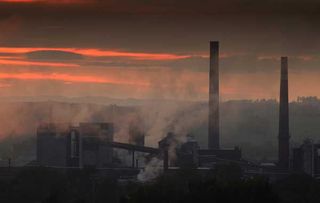
Pollution is the process of making land, water, air or other parts of the environment dirty and non safe or suitable to utilize. This tin can be done through the introduction of a contaminant into a natural surroundings, but the contaminant doesn't demand to be tangible. Things every bit unproblematic every bit light, sound and temperature tin can exist considered pollutants when introduced artificially into an environs.
Toxic pollution affects more than 200 million people worldwide, according to Pure World, a non-profit environmental system. In some of the world's worst polluted places, babies are built-in with nascency defects, children take lost 30 to twoscore IQ points, and life expectancy may be as low every bit 45 years considering of cancers and other diseases. Read on to find out more virtually specific types of pollution.
Land pollution
Country can go polluted by household garbage and past industrial waste material. In 2014, Americans produced about 258 million tons of solid waste, co-ordinate to the U.S. Environmental Protection Bureau. A little over half of the waste — 136 million tons— was gathered in landfills. Just near 34% was recycled or composted.
Organic fabric was the largest component of the garbage generated, the EPA said. Paper and paperboard accounted for more than than 26%; food was xv% and thousand trimmings were 13%. Plastics comprised about 13% of the solid waste, while rubber, leather and textiles fabricated up nine.5% and metals nine%. Woods contributed to 6.two% of the garbage; glass was 4.4% and other miscellaneous materials made up nearly 3%.
Commercial or industrial waste is a significant portion of solid waste. According to the University of Utah, industries apply 4 meg pounds of materials in order to provide the average American family with needed products for i year. Much of it is classified equally non-chancy, such as construction material (woods, concrete, bricks, glass, etc.) and medical waste matter (bandages, surgical gloves, surgical instruments, discarded needles, etc.). Hazardous waste is whatsoever liquid, solid or sludge waste that comprise properties that are dangerous of potentially harmful to man wellness or the environment. Industries generate hazardous waste from mining, petroleum refining, pesticide manufacturing and other chemic production. Households generate hazardous waste product as well, including paints and solvents, motor oil, fluorescent lights, aerosol cans and armament.
Water pollution
Water pollution happens when chemicals or dangerous strange substances are introduced to water, including chemicals, sewage, pesticides and fertilizers from agricultural runoff, or metals like pb or mercury. According to the Environmental Protection Agency (EPA), 44% of assessed stream miles, 64% of lakes and 30% of bay and estuarine areas are not clean plenty for fishing and swimming. The EPA as well states that the United Land'southward most common contaminants are bacteria, mercury, phosphorus and nitrogen. These come from the most common sources of contaminates, that include agricultural runoff, air deposition, water diversions and channelization of streams.
Water pollution isn't just a problem for the Usa. According to United Nations, 783 million people exercise not have access to clean water and around 2.v billion do not have access to adequate sanitation. Adequate sanitation helps to proceed sewage and other contaminants from entering the water supply.
According to National Oceanic and Atmospheric Administration (NOAA), 80% of pollution in marine environment comes from the state through sources similar runoff. H2o pollution tin as well severely affect marine life. For example, sewage causes pathogens to abound, while organic and inorganic compounds in water can modify the composition of the precious resources. According to the EPA, low levels of dissolved oxygen in the water are also considered a pollutant. Dissolved is caused past the decomposition of organic materials, such as sewage introduced into the water.
Warming water can also be harmful. The artificial warming of water is called thermal pollution. It can happen when a factory or power plant that is using water to cool its operations ends up discharging hot water. This makes the water concord less oxygen, which tin kill fish and wild fauna. The sudden change of temperature in the body of h2o can also kill fish. According to the University of Georgia, it is estimated that around half of the water withdrawn from water systems in the United States each year is used for cooling electrical ability plants.
"In nearly all cases, 90% of this water is returned to its source, where it can heighten the water temperature in an expanse immediately surrounding the water discharge pipage. Depending on h2o flow, the water temperature quickly returns to ambient temperatures that practice not harm fish." Donn Dears, former president of TSAugust, a not for profit corporation organisation focused on energy bug, told Live Scientific discipline.
Food pollution, likewise called eutrophication, is some other blazon of h2o pollution. Information technology is when nutrients, such equally nitrogen, are added into bodies of water. The nutrient works like fertilizer and makes algae grow at excessive rates, according to NOAA. The algae blocks light from other plants. The plants die and their decomposition leads to less oxygen in the water. Less oxygen in the water kills aquatic animals.
Air pollution
The air we breathe has a very exact chemical composition; 99% of it is made up of nitrogen, oxygen, water vapor and inert gases. Air pollution occurs when things that aren't normally there are added to the air. A common type of air pollution happens when people release particles into the air from burning fuels. This pollution looks similar soot, containing millions of tiny particles, floating in the air.
Some other common blazon of air pollution is unsafe gases, such as sulfur dioxide, carbon monoxide, nitrogen oxides and chemic vapors. These tin can take part in further chemical reactions once they are in the atmosphere, creating acrid rain and smog. Other sources of air pollution can come from within buildings, such equally secondhand smoke.
Finally, air pollution can accept the form of greenhouse gases, such equally carbon dioxide or sulfur dioxide, which are warming the planet through the greenhouse effect. According to the EPA, the greenhouse effect is when gases absorb the infrared radiation that is released from the Earth, preventing the heat from escaping. This is a natural process that keeps our atmosphere warm. If too many gases are introduced into the atmosphere, though, more than rut is trapped and this can brand the planet artificially warm, according to Columbia Academy.
Air pollution kills more than two meg people each year, according to a study published in the journal of Environmental Research Letters. The effects of air pollution on human health can vary widely depending on the pollutant, according to Hugh Sealy, professor and director of the environmental and occupational health rail at the Section of Public Health and Preventive Medicine, St. George's Academy, St. George'south, Grenada. If the pollutant is highly toxic, the effects on health can be widespread and severe. For example, the release of methyl isocyanate gas at Union Carbide plant in Bhopal in 1984 killed over two,000 people, and over 200,000 suffered respiratory problems. An irritant (e.g. particulates less than ten micrometers) may cause respiratory illnesses, cardiovascular illness and increases in asthma. "The very young, the old and those with vulnerable immune systems are most at risk from air pollution. The air pollutant may exist carcinogenic (e.g. some volatile organic compounds) or biologically active (e.m. some viruses) or radioactive (e.g. radon). Other air pollutants similar carbon dioxide have an indirect touch on human wellness through climate change," Sealy told Live Science.
Noise pollution
Even though humans can't see or odor noise pollution, it notwithstanding affects the surroundings. Noise pollution happens when the audio coming from planes, industry or other sources reaches harmful levels. Research has shown that at that place are straight links between noise and health, including stress-related illnesses, loftier blood pressure level, spoken communication interference, hearing loss. For example, a written report bythe WHO Racket Environmental Burden on Disease working grouping found that noise disturbance may contribute to hundreds of thousands of deaths per year past increasing the rates of coronary centre illness. Under the Clean Air Act, the EPA tin regulate machine and plane racket.
Underwater noise pollution coming from ships has been shown to upset whales' navigation systems and kill other species that depend on the natural underwater globe. Noise likewise makes wild species communicate louder, which can shorten their lifespan.
Light pollution
Most people can't imagine living without the modern convenience of electrical lights. For the natural world, though, lights have inverse the fashion that days and nights work. Some consequences of light pollution are:
- Some birds sing at unnatural hours in the presence of artificial light.
- Scientists have determined that long artificial days tin touch migration schedules, equally they allow for longer feeding times.
- Streetlights can confuse newly hatched body of water turtles that rely on starlight reflecting off the waves to guide them from the embankment to the ocean. They oft head in the wrong direction.
- Lite pollution, called sky glow, also makes it difficult for astronomers, both professional person and amateur, to properly see the stars.
- Plant's flowering and developmental patterns tin can exist entirely disrupted past artificial light.
- Co-ordinate to a written report past the American Geophysical Union, calorie-free pollution could likewise be making smog worse by destroying nitrate radicals that helps the dispersion of smog.
Turning on and then many lights may non exist necessary. Research published by International Journal of Scientific discipline and Research estimates that over-illumination wastes nearly ii 1000000 barrels of oil per mean solar day and lighting is responsible for one-fourth of all energy consumption worldwide.
Other pollution facts:
- Americans generate 30 billion cream cups, 220 one thousand thousand tires, and 1.8 billion disposable diapers every year, according to the Green Schools Alliance.
- According to the WHO, ambient air pollution contributes to 6.7% of all deaths worldwide.
- The Mississippi River drains the lands of nearly xl% of the continental United Sates. It also carries an estimated one.five one thousand thousand metric tons of nitrogen pollution into the Gulf of United mexican states each year, resulting in a dead zone each summertime about the size of New Jersey.
- Pollution in China can alter weather patterns in the The states. It takes but five days for the jet stream to carry heavy air pollution from People's republic of china to the U.s.a., where it stops clouds from producing rain and snow.
- About seven meg premature deaths annually linked to air pollution, according to WHO. That is one in eight deaths worldwide.
Additional resources
- WHO: World Water Solar day Report
- EPA: H2o Quality Facts
- Columbia University: The Greenhouse Effect and Global Warming
- U.S. National Library of Medicine: Noise pollution
- Green School Alliance: Pollution Facts

Alina Bradford is a contributing writer for Live Science. Over the past 16 years, Alina has covered everything from Ebola to androids while writing health, science and tech articles for major publications. She has multiple health, safety and lifesaving certifications from Oklahoma State University. Alina's goal in life is to attempt equally many experiences as possible. To date, she has been a volunteer firefighter, a dispatcher, substitute instructor, artist, janitor, children's volume author, pizza maker, event coordinator and much more.
Read Case 7.2 in the Shaw Textbook, â€å"poverty and Pollution,ã¢â‚¬â Pp. 275-276
Source: https://www.livescience.com/22728-pollution-facts.html

Post a Comment for "Read Case 7.2 in the Shaw Textbook, â€å“poverty and Pollution,ã¢â‚¬â Pp. 275-276"